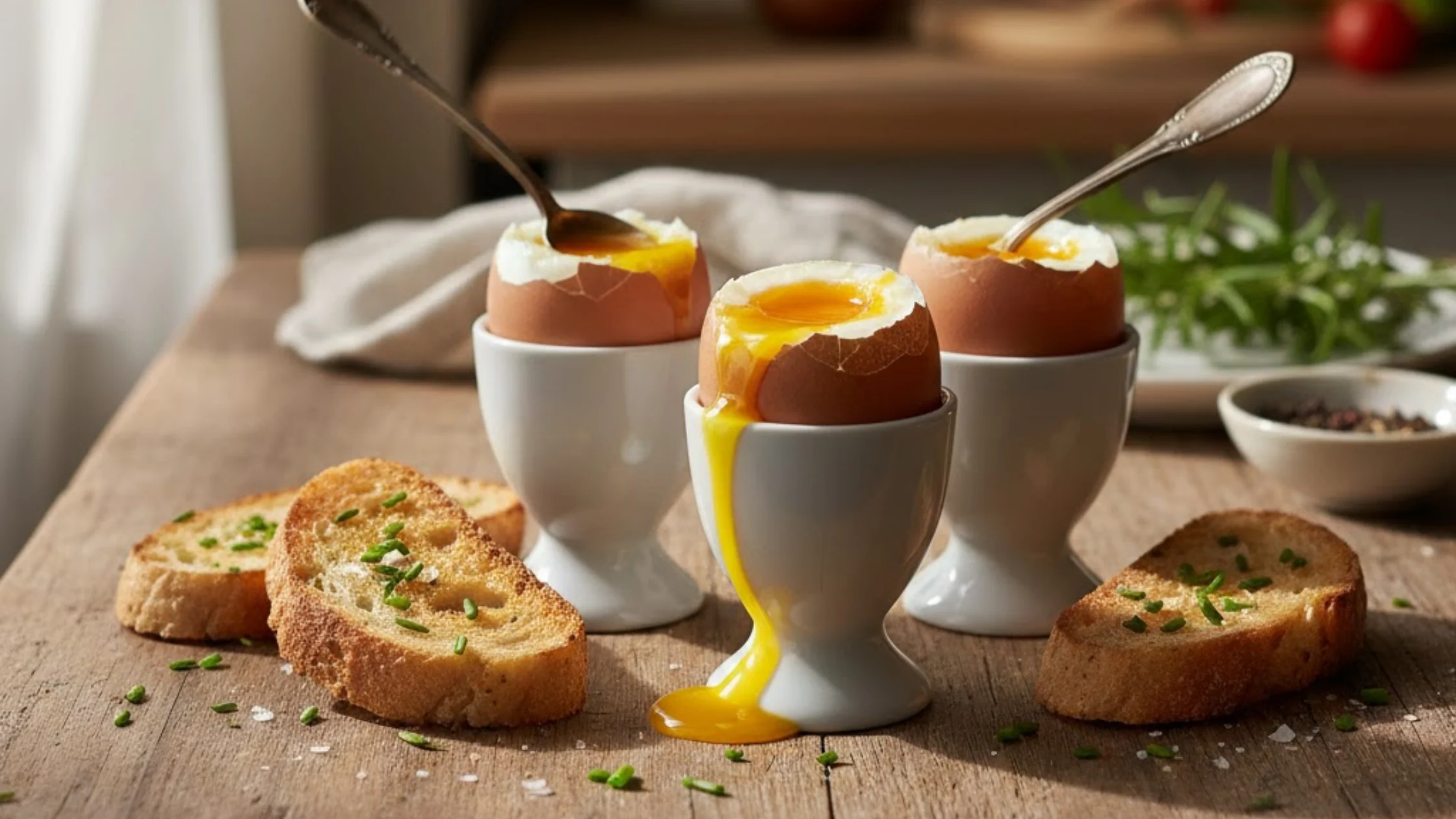
Let’s be real. A perfectly runny soft boiled egg is one of the best foods on the planet. It’s simple, yes. But it feels like a million bucks. That golden, warm yolk spilling over a plate? Pure magic.
But getting there can be a disaster zone. One minute you’re staring at a raw white. Next, you’ve got a chalky, greenish-yolk horror show. I’ve been there. It’s heartbreaking.
This guide is your rescue mission. We aren’t just talking about how to make soft boiled eggs. We are diving deep into the science, the timing, and the secret hacks to get it right every single time. By the time we’re done, you won’t just have a recipe. You’ll have a skill.
We will cover the best soft boiled egg recipe, nail the soft boiled egg timing, and even look at soft boiled egg benefits. Whether you are a kitchen newbie or a burned-out cook looking for redemption, this is for you. Let’s crack it.
🥚 Soft boiled eggs nutrition facts
| Calories (from fat 48) | 78 |
| % Daily Value * | |
|---|---|
| Total Fat 5.3 g | 8% |
| Saturated Fat 1.6 g | 8% |
| Trans Fat 0.0 g | |
| Polyunsaturated Fat 0.7 g | |
| Monounsaturated Fat 2.0 g | |
| Cholesterol 186 mg | 62% |
| Sodium 62 mg | 3% |
| Potassium 63 mg | 2% |
| Total Carbohydrate 0.6 g | 0% |
| Dietary Fiber 0 g | 0% |
| Sugars 0.6 g (incl. 0g added) | |
| Protein 6.3 g | 13% |
| Vitamins & minerals | |
| Vitamin D | 1.1 µg (6%) |
| Calcium | 25 mg (2%) |
| Iron | 0.6 mg (3%) |
| Potassium (again) | 63 mg (2%) |
| Vitamin A | 70 µg (8%) |
| Vitamin B12 | 0.6 µg (25%) |
| Folate | 22 µg (6%) |
| Phosphorus | 86 mg (12%) |
| Selenium | 15.8 µg (29%) |
| Choline | 147 mg (27%) |
Percent Daily Values based on a 2,000 calorie diet. • extra facts: large egg ~50g, provides high-quality protein, lutein+zeaxanthin.
Source: USDA FoodData Central (basic egg, whole, cooked, hard-boiled, aligns with soft boiled).
The Quest for the Perfect Soft Boiled Eggs
Why are we so obsessed with getting the perfect soft boiled eggs? It’s that texture. The contrast. You have a white that’s just set—tender, not rubbery. And then you hit the yolk. It should be warm, saucy, and rich. It’s not just food; it’s an experience.
Think about dipping a crispy, soft boiled eggs with a toast soldier into that yolk. That’s comfort. That’s a hug on a plate. But if you mess up the timing, that hug turns into a chokehold of disappointment.
It’s a small window of perfection. We’re talking seconds, not minutes. But once you understand the rules, that window stays wide open for you. It’s about respecting the egg. It’s a cheap ingredient, sure, but it demands precision.
I once tried to impress a date with a fancy breakfast. I dropped the eggs into boiling water and got distracted by my phone. Ten minutes later, I was serving up two grey, bouncy tragedies. The date didn’t last. The lesson did. Respect the timer.
How to Make Soft Boiled Eggs: The Only Method You Need
Forget the old wives’ tales. You don’t need to poke holes in the shell or start with cold water. Here is the battle-tested method for cooking soft boiled eggs in a pot. It’s the same technique used by chefs who need to plate 50 perfect eggs during a busy brunch service.
What You’ll Need:
- Large eggs (straight from the fridge)
- A medium saucepan
- A slotted spoon or spider
- A big bowl of ice water (an ice bath)
The Game Plan:
- Boil the Water: Fill your pot with enough water to cover the eggs by about an inch. Crank the heat to high and bring it to a full, rolling boil. We’re talking violent bubbles.
- Lower Them Gently: This is the moment of truth. Take your cold eggs. Use a slotted spoon and gently lower them into the furious boiling water. Don’t drop them in, or they will crack and turn into egg drop soup.
- Reduce to Simmer: Once the eggs are in, the water will calm down a bit. Turn the heat down to maintain a gentle simmer, not a crazy boil. Boiling too hard can bounce the eggs around and crack them.
- Time it perfectly: Set your timer immediately. It is where the magic happens.
- The Ice Bath Shock: The second the timer goes off, scoop those eggs out and plunge them into the ice bath. Leave them there for at least 5 minutes. It stops the cooking instantly. It’s the only way to guarantee that perfect yolk and not a sad, overcooked one.
Soft Boiled Egg Timing: The Exact Minutes You Need
Okay, this is the part everyone fights about. How long to boil eggs for a soft yolk? It depends on what you want. Are you a purist who wants a totally runny, dip-able yolk? Or do you want something a little thicker, a “jammy” yolk that’s perfect for topping a bowl of ramen?
Here is your cheat sheet for large eggs going straight from the fridge into boiling water:
- 4-5 Minutes: The “Ultrasoft.” The white might be just barely set in places. The yolk is completely liquid and warm. It is for the brave.
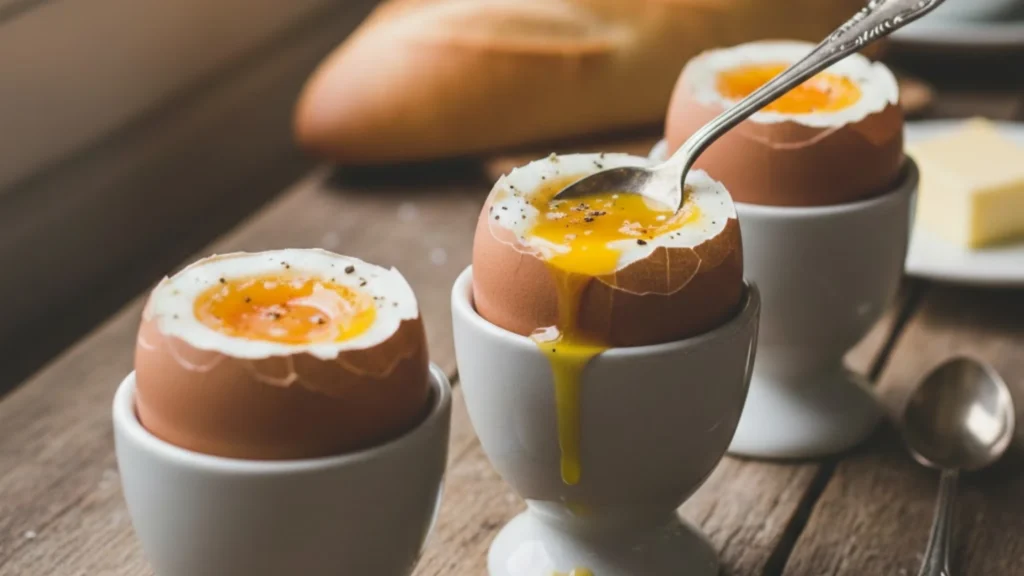
- 6 Minutes: The Gold Standard. The white is fully set and tender. The yolk is mostly runny but starting to thicken at the edges. It is the classic perfect soft boiled eggs texture for dipping toast.
- 7 Minutes: The “Jammy” or Medium Egg. The yolk is soft and fudge-like, not really runny anymore. It holds its shape but is still creamy. It is heaven on a salad or in a ramen bowl.
- 8 Minutes: Danger Zone. The yolk is starting to look pale and crumbly. You are sliding toward hard-boiled territory.
Pro Tip: If you use smaller or jumbo eggs, adjust by about 30 seconds. Write your preferred time on a sticky note on your fridge. No one remembers this stuff in the morning.
Why the Ice Bath Isn’t Optional
Listen to me carefully. Skipping the ice bath is the number one reason people fail. When that egg comes out of hot water, it is still cooking from the inside out. If you just run it under cold tap water for 10 seconds, the center stays hot and keeps getting firmer.
The ice bath is a hard stop. It shocks the egg. It also makes how to peel soft boiled eggs ten times easier. The cold shrinks the egg inside the shell slightly, pulling it away from the membrane. It is the secret to a clean peel and a pretty egg.
Soft Boiled Eggs vs Hard Boiled Eggs: A Clear Winner?
They are both eggs, but they live very different lives. Soft-boiled eggs vs hard boiled eggs isn’t really a fight. It’s about picking the right tool for the job.
- Texture: A soft boiled egg is dynamic—soft white, liquid gold center. A hard-boiled egg is uniform from center to edge.
- Best Uses: You eat soft boiled eggs for breakfast with a spoon or toast. Hard-boiled eggs get chopped into salads, turned into deviled eggs, or taken on a hike as a sturdy snack.
- The Experience: Eating a soft-boiled egg requires a bit of ceremony. You crack the top, you dip, you savor. A hard-boiled egg is fast food. Peel and eat.
The Secret World of Egg Yolk Texture
The egg yolk texture tells you everything. It’s a timeline of heat.
- Runny (4-6 min): The fat in the yolk hasn’t had time to solidify. It’s an emulsion ready to become a sauce.
- Jammy (7 min): The proteins have begun to set, but the fat keeps it creamy. It’s the perfect middle ground.
- Chalky/Crumbly (8+ min): The proteins have tightened up so much that they squeeze out all the water. The yolk turns into a dry, dusty powder. It is what we are trying to avoid.
Are Soft Boiled Eggs Actually Good for You?
Let’s talk about healthy soft boiled eggs. The short answer is yes. In fact, they might be the best way to eat them.
When you ask about soft boiled egg nutrition, the stats are impressive. One large egg packs about 6-7 grams of high-quality protein and only around 70-80 calories. They are packed with vitamins like B12, D, and A, and minerals like selenium and phosphorus.
Healthy Soft Boiled Eggs Benefits:
- Nutrient Retention: Some studies suggest that shorter cooking times (like soft boiling) help retain more heat-sensitive vitamins, such as B vitamins, compared to hard boiling or frying.
- Weight Management: The protein in eggs is known to increase satiety. Eating low-calorie soft-boiled eggs for breakfast can keep you full until lunch, stopping you from raiding the vending machine.
- Brain and Eyes: Eggs contain choline (great for your brain) and antioxidants like lutein and zeaxanthin, which are fantastic for eye health.
A Note on Safety
Here’s the real talk. Because the yolk is runny, it isn’t cooked to a temperature that kills all bacteria. The risk of Salmonella is low, but it’s real. This is why you should use fresh, high-quality eggs from a reliable source.
- High-Risk Groups: Pregnant women, young children, the elderly, or anyone with a weakened immune system should stick to fully cooked (hard-boiled) eggs to be safe.
- The British Lion Mark: In the UK, eggs with the British Lion mark are considered safe for everyone to eat runny because of their vaccination program against Salmonella. Know your eggs.
How to Eat Them: Beyond the Egg Cup
Okay, you’ve nailed the easy soft boiled eggs. Now what? Don’t just stare at them.
- The Classic Soldiers: Toast, cut into strips, buttered, and dipped right into the runny yolk. It’s the best breakfast on earth.
- Ramen Royalty: A soft-boiled egg, marinated in soy sauce and mirin, is the crown jewel of any noodle soup.
- Salad MVP: Slice a jammy (7-minute) egg in half and put it on a bed of greens, roasted veggies, or a grain bowl. The yolk acts as a dressing.
- Avocado Toast Upgrade: Smash some avocado on toast, top with a sliced soft-boiled egg, salt, pepper, and chili flakes.
Unconventional Hacks: Soft Boiled Eggs in a Microwave?
Can you make soft boiled eggs in a microwave? Technically, yes. But it’s risky. Microwaves heat unevenly, and eggs can literally explode because steam builds up inside the shell. If you must, you need to pierce the yolk and the bottom of the egg with a pin, cover it with water, and use a low power setting in short bursts.
Honestly, for the sake of your microwave and your face, use a pot. The 6-minute stovetop method is safer and gives you more control over the egg yolk texture.
Pro Tips for Zero Stress
Let’s wrap this up with some battle-tested egg cooking tips to make your life easier.
- Use a Timer: Do not guess. Do not trust your internal clock. Set a loud timer.
- Fresh vs. Old Eggs: Very fresh eggs are amazing for poaching, but they are a nightmare to peel. If you are making eggs to peel and eat, eggs that are a week or so old actually peel more easily.
- Cracking the Shell: To peel, gently tap the egg all over on the counter to make a spiderweb of cracks. Start peeling from the wider end, where the air pocket is. It helps get under the membrane.
- Room Temp is a Myth: You don’t need to bring eggs to room temp. Dropping cold eggs into hot water helps separate the membrane from the shell, aiding the peeling process later.
Conclusion: Your Perfect Egg Awaits
There you have it. The mystery of the perfect soft boiled eggs is solved. It’s not about luck. It’s about six minutes (or seven, if you’re jammy), a rolling boil, and an ice bath. It’s a simple ritual that pays off in delicious, golden rewards.
Stop settling for overcooked, rubbery eggs. You have the knowledge now. You know how to make soft boiled eggs that are worthy of a fancy brunch spot. You understand the soft boiled egg benefits. You’re armed with the best soft boiled egg recipe.
Now boil some eggs. And don’t forget the toast.
Frequently Asked Questions
1. How long should I boil eggs for a runny yolk?
For a classic runny yolk, you should boil large eggs for exactly 6 minutes. If you want it extremely runny, go for 5 minutes. Remember to start your timer as soon as you lower the eggs into the boiling water.
2. Why do my hard-boiled eggs turn green?
That green ring around the yolk is not harmful. It’s just a reaction between iron in the yolk and sulfur in the white. It happens when eggs are overcooked. Sticking to the correct timing and using an ice bath immediately will prevent this.
3. Are soft-boiled eggs safe to eat every day?
For most healthy adults, yes. Eating a soft-boiled egg daily is safe and provides great nutrition, like protein and vitamins. However, because the yolk is runny, ensure you buy pasteurized or high-welfare eggs (like those with the British Lion mark) to minimize the risk of Salmonella.
4. What is the best way to peel a soft-boiled egg?
The best way is to shock them in an ice bath for at least 5 minutes right after cooking. It stops the cooking and shrinks the egg away from the shell. Then, gently tap it on the counter to crack the shell all over and peel starting from the wider end.
5. Can I reheat a soft-boiled egg?
You can, but it’s tricky. The best method is to place them in a bowl and pour hot (not boiling) tap water over them. Let them sit for 2-3 minutes. It warms them through without cooking the yolk further. Avoid the microwave, as it will likely explode the yolk.
Read More Sports Related Blog: Rams vs Bears