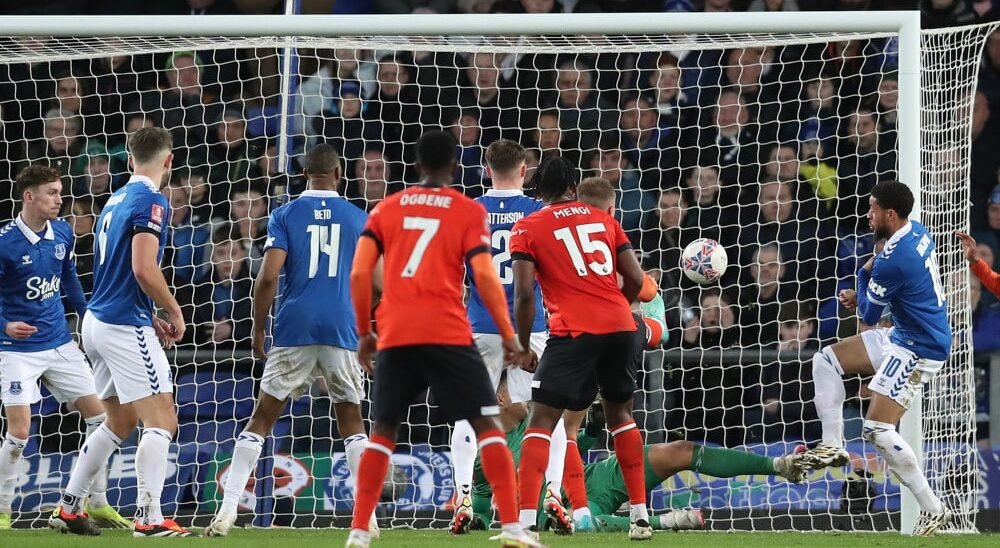
In the 2024/2025 Premier League season, the ball does not move through a neutral environment: every pass and shot is mediated by grass, moisture, wind and temperature. Modern stadiums and undersoil heating have reduced extreme cases, but heavy rain, strong winds and winter cold still alter tempo, pass accuracy and shot quality enough to shift the true expectation around common lines like over/under 2.5 goals. Bettors who treat pitch and weather as quantifiable inputs, rather than background scenery, can refine which totals they touch and when they stand aside.
Why weather and pitch conditions are a logical input into totals
The core logic is straightforward: anything that changes ball speed, player footing or visibility will change how often attacks reach high-quality shooting positions. Wind can distort long passes and crosses, rain can slow or skid the ball, and cold can subtly reduce technical precision as muscles tighten and players conserve energy. Each of these shifts pushes the real scoring environment away from the averages that many models and markets implicitly assume.
Empirical work on weather and football confirms that these effects are systematic rather than anecdotal. A study of Premier League results found that the probability of matches going over 2.5 goals declines as temperatures fall, even though any single cold match can still finish 3–2 or 4–1. Broader performance research also shows that temperature and humidity affect high-intensity running and technical skill, which in turn alter the volume and quality of chances created. For an over/under bettor, that means conditions can tilt a borderline 2.5-goal game toward an effective environment of 2.2 or 2.8 goals before a ball is kicked.
How wind, rain and cold change attacking patterns
Different weather elements influence football in different ways. Strong winds disrupt the ball’s flight, particularly on long diagonals, lofted passes and crosses, forcing teams either to go more direct with low passes or to accept more miscontrols and turnovers. Betting guides highlight that in high wind, coaches often simplify tactics, cutting back on risky long balls and early shooting, which tends to reduce both passing efficiency and clean chance creation.
Heavy rain can either speed up or slow down play depending on drainage and intensity. On well-maintained Premier League pitches, light rain often quickens the surface, helping fast passing and sharp cutbacks, but prolonged downpours can lead to pooling water that stops the ball, breaks passing chains and encourages more clearance-heavy, low-xG football. Cold itself does not kill goals in a deterministic way, but statistical analysis of English football shows that colder matches have a lower proportion of overs across large samples, reflecting collective adjustments in tempo, risk-taking and technical execution.
Pitch quality, surface hardness and their indirect impact
While Premier League grounds are usually in excellent condition, even small changes in surface properties can shape performance. Studies in rugby and other field sports show that suboptimal or unusually hard pitches are associated with higher injury incidence and altered movement patterns, as players adjust their strides and become more cautious in accelerations and tackles. Overly wet fields, where the ground becomes muddy and footing uncertain, are also linked with clumsier movements and reduced ability to plant firmly during sprints and shots.
In practice, that translates into fewer explosive one-on-ones, more slips at key moments and more conservative defending in dangerous zones, all of which can lower the effective xG per attack. Conversely, a smooth, slightly damp hybrid surface encourages fast switching and quick cutbacks, supporting high-tempo football that produces more cut-backs and tap-ins rather than hopeful long shots. For totals, the same rainfall pattern can yield different implications depending on pitch quality and drainage at that particular ground.
How UFABET users can treat conditions as a pre-match filter
When you build totals positions through a football-focused betting interface, environmental checks become a practical filter rather than a theoretical curiosity. If the forecast shows winds above roughly 20 km/h and sustained rain for an evening match in a more exposed ground, you are no longer evaluating a neutral 2.5-goal environment; you are evaluating whether attacking plans can survive repeated disruptions to passing and crossing. For someone staking through ufa168, the analytical step is to treat that information as a reason to downgrade confidence in marginal overs, adjust preferred lines, or focus on sides historically more comfortable in adverse conditions, rather than simply reacting at kick-off when the first miscued pass appears.
Using lists to structure pitch and weather checks before choosing over/under
Because pitch and weather information arrives from multiple sources—forecasts, local reports, photos—it helps to run a consistent set of checks before deciding whether totals are attractive. A structured sequence turns vague concern (“it might be wet”) into specific, actionable expectations about ball behaviour and tempo.
For each match, you might systematically look at:
- Wind speed and direction: Identify whether forecasts suggest calm (<10 km/h), moderate (10–20 km/h) or strong winds (>20 km/h), and whether the wind will blow end-to-end or across the pitch, as crosswinds and headwinds disturb ball flight differently and influence set-piece threat.
- Rain intensity and duration: Distinguish between light rain before kick-off (which can quicken a good surface) and heavy rain during the match that risks puddling; combine this with knowledge of the stadium’s drainage history and whether recent fixtures have already saturated the pitch.
- Temperature band: Note whether conditions fall into a mild, cold (<10°C) or extreme spectrum; over large datasets, colder matches show a reduced share of overs, not because goals become impossible but because intensity and risk-taking change subtly.
- Ground condition signals: Watch for reports or images of cutting-up surfaces, sodden goalmouths or extra pitch inspections; research on suboptimal pitches and ground hardness in other field sports shows these factors are linked with altered movement and higher injury risk, both of which push coaches toward more cautious game plans.
Interpreting this list, rather than treating each item in isolation, helps you decide when the environment genuinely shifts your expected goal range. A match with light drizzle on a modern surface and low wind may not justify any adjustment, whereas a night game with strong gusts, sustained rain and reported pitch concerns tilts the risk-reward balance toward unders or no bet on high totals, especially when the baseline line is already aggressive.
When weather narratives overstate their effect on totals
Weather’s influence is real but often overstated in individual matches. The Soccermetrics analysis of temperature versus Premier League goals makes this clear: cold conditions reduce the proportion of overs across many games, but any single cold match can still exceed 2.5 goals comfortably. Similarly, general betting content stresses that mild wind or intermittent rain has limited impact on scoring, and that bettors tend to overreact when they see images of snow or hear commentary about “terrible conditions.”
Advanced guides on weather and football betting caution that moderate wind bands (for example 10–15 mph in NFL data) barely change scoring efficiency once you control for coaches’ tendency to shorten field-goal attempts, showing that only stronger winds materially distort play. The practical takeaway for Premier League totals is that small deviations from ideal conditions should not automatically push you to unders, especially when tactical matchups, team styles and finishing variance still dominate scoring outcomes. Over-weighting a drizzle or a light breeze can be as costly as ignoring a genuine storm.
Mechanisms: when bad conditions can actually support overs
Certain adverse conditions increase volatility, which can support overs in specific setups. Strong winds can create defensive errors on long balls, misjudged clearances and chaotic second balls, leading to scrappy high-xG chances that would not occur in calm weather. Heavy rain can cause slips at crucial defensive moments or goalkeeping spills on skidding shots, raising the chance that a few low-probability attempts turn into goals.
Moreover, some teams excel in harsher environments. Historical analysis shows that sides accustomed to windy, cold grounds—Stoke being the classic example—have historically earned significantly higher points per game in midweek cold, windy fixtures than in standard conditions, reflecting their tactical and psychological adaptation to local weather. In matches where one team clearly handles those scenarios better, degraded conditions may widen the performance gap enough to increase total goals via mismatches rather than suppress them. Recognising these mechanisms keeps you from treating “bad weather” as a synonym for “under” in every case.
Using tables to connect condition profiles to over/under lean
To make the link between conditions and totals concrete, you can frame common scenarios in a simple table that ties environment to default lean, always to be refined by team styles and line value.
| Condition profile | Typical tactical and technical effects | Baseline over/under lean (before team/tactical adjustment) |
| Calm, mild, good surface | Normal passing, full tactical execution, high-intensity pressing sustainable | Neutral; rely mainly on team xG and style |
| Strong wind, heavy rain, soft pitch | Distorted long balls, more errors, more clearances, slower structured attacks | Slight lean to unders on high lines; watch for chaotic overs |
| Cold, light wind, decent surface | Small drop in tempo and finishing edge across samples | Marginal under bias on tight lines, low conviction |
This table is not a model, but a way to avoid inconsistent reasoning. If you lean to an over in a match that sits squarely in the “strong wind, heavy rain” cell, you should have explicit tactical or price-based arguments—such as two high-pressing sides prone to defensive errors—to support that decision. Without those, sticking with the environment-driven lean can prevent marginal bets made purely out of habit.
Summary
In the 2024/2025 Premier League, pitch and weather conditions remain quiet variables that shift how easily teams can turn possession into clean chances, even within modern stadiums and improved surfaces. Strong wind, sustained rain, cold and suboptimal turf each change passing efficiency, tempo and movement patterns in ways that, across many matches, nudge goal distributions away from neutral expectations around key lines like over/under 2.5. Bettors who check forecasts and ground reports systematically—distinguishing minor from major effects and combining them with tactical and price analysis—can treat environment as a real but bounded factor in totals, improving selectivity without turning every cloudy forecast into an automatic bet on the under.