Let’s talk about the pizza edition GitHub project. It’s not about food. It’s about code. Imagine you have a box of LEGOs. You can build a car, a house, or a spaceship. This project is a box of digital LEGOs. It’s free. It’s open. It’s waiting for you. It is the pizza edition open source dream.
You get the pizza edition source code. You can look at every piece. You can change it. You can make it yours. This article is your map. We will find the pizza edition repository link. We will download it. We will set it up. Let’s get our hands dirty.
Pizza Edition on GitHub — What it is and what you typically find
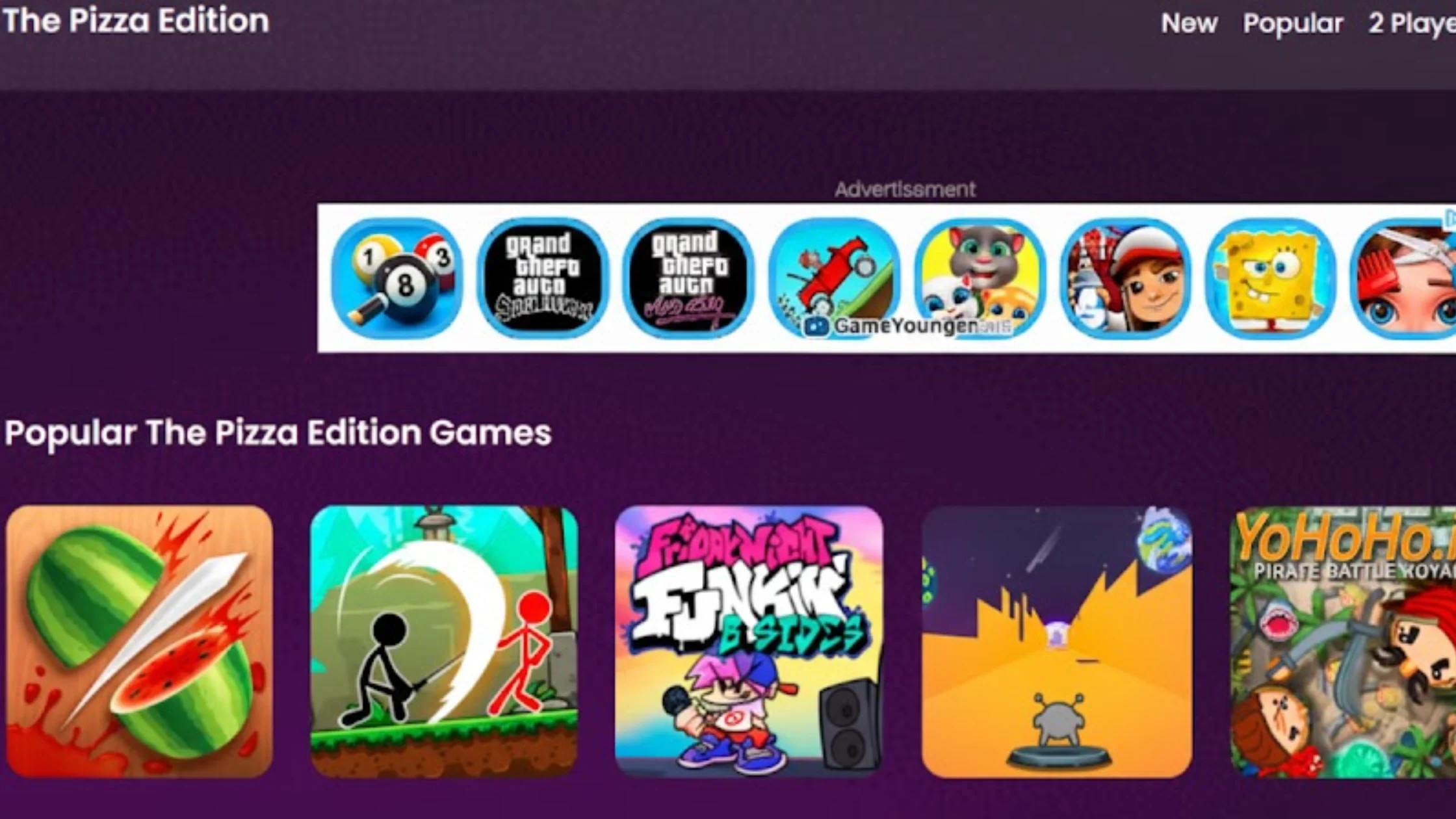
GitHub-hosted “Pizza Edition” projects often use GitHub Pages + static assets to publish a browser-based catalog/portal.
High-level overview
| Item | Details |
|---|---|
| What “Pizza Edition GitHub” usually refers to | A GitHub organization/user plus a GitHub Pages site that presents categories (e.g., New, Popular, 2 Player, Sports, etc.) and loads a large list of items as tiles/cards. |
| Public-facing interface | A category menu (top navigation) and multiple sections like “Popular” and “New”, with many linked items. |
| Hosting pattern | Static hosting (commonly GitHub Pages) where index.html, css/, js/, and images/ serve the full site without a traditional backend. |
| Why GitHub is used | Easy publishing, version history, forks, and simple collaboration for updating assets, navigation, and site layout. |
Observed navigation categories (example layouts)
| UI Element | Examples of categories shown |
|---|---|
| Top menu | New, Popular, 2 Player, Car, Sports, plus expanded categories such as Skill, Running, 3D, Shooting, Multiplayer, Racing, Moto, Stickman, Adventure, Puzzle, Animal, Platform, Simulation, Management, Survival, Strategy, Board, For Girls. |
| Sections | “Popular … Games” and “New … Games”, each typically listing many entries. |
| Policy page | A DMCA page link is commonly present in the footer/navigation. |
Repository structure you may see (static-site style)
| Folder / File | What it commonly contains |
|---|---|
| index.html | The main entry page (layout, sections, and links/cards placeholders). |
| css/ | Theme, typography, responsive grid, card styles, menu styling. |
| js/ | Client-side behaviors (menu interactions, filtering, rendering lists, lazy-loading). |
| images/ / media/ | Thumbnails, icons, UI assets, and media used in tiles/cards and headers. |
| category/ | Category pages or category data used by the navigation system. |
| ads.txt / verification files | Ad/ownership declarations and verification artifacts (when used). |
What Is This Pizza, Really?
Think of a really good pizza. The base is the crust. It’s simple. Reliable. The pizza edition GitHub repository is that crust. It’s the foundation. The base code that makes everything else possible. The toppings are the features.
The special things you add. Maybe extra cheese. Maybe pepperoni. In this project, the toppings are the tools and functions that the developers built.
It’s open source. That’s a fancy term for “everyone can see the recipe.” You don’t buy a frozen pizza. You get the flour, yeast, and tomatoes. You learn how it’s made. That’s the power of the pizza edition GitHub code. You see the logic. You see the mistakes. You see the brilliance.
I remember the first time I opened a big project like this. It felt like walking into a dark kitchen. I saw a million buttons. I heard weird hums from the computer. I was scared to touch anything. Then I found one file. I changed one number.
The color on the screen shifted from blue to green. That was it. That tiny change was my “aha!” moment. The kitchen lights came on. The pizza edition GitHub project can be your light switch.
Finding the Kitchen: The Repository Link
You need to get to the kitchen first. You need the address. The pizza edition repository link is your address. Head to GitHub. It’s a website where millions of code projects live. It’s like a library for builders.
Search for “pizza edition.” The main project should pop up. The page has a green button that says “Code.” Click it. There’s your pizza edition project download option. You can download a ZIP file. It’s like getting your pizza ingredients delivered in one box.
Or, if you’re feeling fancy, you can “clone” it. Cloning uses a tool called Git. It copies the project to your computer and keeps a live connection. When the chefs update the recipe, you can pull in the new changes. It is the pro move. But starting with the ZIP file is perfectly fine. No shame.
Unboxing the Ingredients: The Source Code Explained
You downloaded the ZIP file. You unzipped it. Now you see folders. Src, docs, public. It looks chaotic. Let’s break it down.
The src folder is the heart. “Src” stands for source. It is the pizza edition source code explained in its pure form. These are the text files with the .js, .html, or .py endings. They are instructions for the computer.
- index.html: This is the menu. It’s the first page a web browser loads. It structures the page.
- style.css: This is the interior design. It makes things pretty. Colors, fonts, spacing.
- app.js: This is the brain. This file makes things happen. Buttons click, data moves, magic occurs.
Opening these files can feel overwhelming. The text is dense. There are weird symbols ({[]}). Please don’t read it like a book. Scan it. Look for comments.
Developers leave notes that start with // or /*. These notes explain what the next chunk of code is trying to do. They are your friend. The pizza edition GitHub source code explained starts with these comments.
A project I messed with last year had a comment that just said “// HACK: This is ugly but it works.” I laughed. It was so human. It wasn’t perfect. It just worked. That’s real brand storytelling in code form. It’s honest.
Turning On the Oven: The Project Setup Guide
You have the ingredients on the counter. Now you need to preheat the oven. You need to set up your environment. It is the pizza edition GitHub project setup guide.
First, you need a code editor. Think of it as your knife and cutting board. Download VS Code. It’s free. It’s powerful. It’s friendly. Open your project folder in VS Code.
Now, look for a special file. It might be called README.md. README files are the instruction manual. The good ones tell you exactly what to do. They list the pizza edition GitHub installation steps.
Often, Step 1 is installing dependencies. Dependencies are other, smaller boxes of LEGOs that your project needs to run. The README will tell you to run a command in the terminal. The terminal is a text-based way to boss your computer around.
You might see:
bash
npm install
You type that and hit enter. Your computer whirs. It downloads all those extra LEGO boxes from the internet. This step fails sometimes. An error flashes in red. It is normal. It is the painful flop. Don’t panic. Copy the error. Google it. You will find someone on a forum who had the same problem. It is how you learn. It’s street-smart charm in developer form.
Baking the Pie: How to Run the Project
Dependencies are installed. The oven is hot. Time to bake. It is how to run the pizza edition GitHub project.
Back in the terminal, the README will give the next command. Often it’s:
bash
npm start
or
bash
python app.py
You hit enter. More whirring. Then, a beautiful message: “Server running on http://localhost:3000“. Localhost means “this computer.” 3000 is a door number.
Open your web browser. Type http://localhost:3000 into the address bar. Hit enter.
Boom. There it is. The pizza edition GitHub project demo. It’s running on your machine. You are not just looking at a website. You are hosting it. It is a huge difference. You have the power now. You can break it. You can fix it. You can change the title from “Welcome” to “Welcome to My Awesome Pizza Shop.”
Play with it. Click every button. Enter bad data. See what happens. Does it show a nice error? Does it crash? Testing like this is conversion optimization for your brain. You’re converting from a user to a builder.

Adding Your Own Toppings: Where to Go Next
The demo runs. Success! But staring at a finished pizza is boring. You want to add mushrooms. Or pineapple (if you’re brave).
It is where you start to edit. Go back to style.css. Find the color for the header. Change its hex code (like #FF5733) to something else. Save the file. Refresh your browser page. The color changed instantly. That feeling is addictive.
Try something bigger. In index.html, find a line of text between <p> tags. Change it. Save. Refresh. Your words are now on the screen.
The pizza edition GitHub project documentation (if it exists in a docs/ folder) will explain the bigger ideas of how the data flows, how the pieces connect. This is your blueprint for major renovations.
Remember, social proof is everywhere here. Look at the “Issues” tab on the GitHub page. People report bugs. They ask questions. Look at the “Pull Requests” tab. People suggest improvements. They fix typos. This is a living community. You can join it.
The Real-World Kitchen Quirks
Let’s get gritty. It isn’t a perfect tutorial video. Real coding is a mess.
- Node.js version conflicts: The project might need an older version of a tool. Your computer has a new one. Things break. You need a version manager like nvm.
- Missing API keys: The demo might need a key from Google Maps or a weather service to fully work. You’ll have to sign up for a free account and get your own key. The .env file is where you store these secrets.
- The “It Works on My Machine” Ghost: The code runs for you. You send it to a friend. It crashes on their computer. This is the oldest ghost in tech. Virtual containers (Docker) are becoming the exorcism of choice.
It is the battle-tested wisdom. The classroom theory says “run npm install.” The street says, “Good luck, and may your Wi-Fi be strong.”
Google-Optimized FAQs
Q1: Where can I get the pizza edition GitHub project for free download?
A1: Go to the official Pizza Edition repository on GitHub.com. Click the green “Code” button and select “Download ZIP.” That’s your free, complete source code package.
Q2: Is the pizza edition source code hard to understand for beginners?
A2: It can be challenging at first, like any new recipe. Start by reading the README.md file and all the code comments (//). Focus on one small file, like index.html, to understand the structure before diving into the complex logic.
Q3: What are the basic pizza edition GitHub installation steps?
A3: 1) Download the ZIP or clone the repo. 2) Install a code editor (VS Code). 3) Open the project folder. 4) Install dependencies (often with npm install in the terminal). 5) Start the project (often with npm start).
Q4: How do I see a pizza edition GitHub project demo?
A4: After following the installation steps and running the start command, your terminal will give you a local address (like http://localhost:3000). Type that address into your web browser to see the live demo running on your own computer.
Q5: What if I get an error during the pizza edition project setup?
A5: Errors are normal! Copy the exact error message from your terminal and paste it into a search engine like Google. You’ll almost always find a solution on developer forums like Stack Overflow. It’s the most common way to solve problems.
Your Slice of the Pie
So, what’s the point of all this? The pizza edition GitHub project is more than code. It’s an invitation. It’s a conversation starter. It’s a puzzle that makes you smarter.
You don’t have to be a master chef. Start by warming up the frozen pizza. Run the demo. Then add a sprinkle of cheese. Change a color. Then try making your own sauce. Add a new feature.
The pizza edition open source world runs on this: people sharing their half-baked ideas so others can finish them. It’s messy. It’s frustrating. It’s incredibly rewarding.
Find that pizza edition repository link. Hit download. Open the code. Stare at it. Break it. Please fix it. That’s the cycle. That’s how you go from reading the menu to working the kitchen. Your first commit to a project, even if it’s just fixing a typo in the README, is a silent high-five across the internet. It means you’re part of the crew now. Now build something.
References & Further Exploration:
- GitHub Official Docs: https://docs.github.com
- Visual Studio Code Editor: https://code.visualstudio.com
- Stack Overflow Developer Community: https://stackoverflow.com
- Mozilla Developer Network (MDN) – For HTML, CSS, JS basics: https://developer.mozilla.org
Disclaimer: The “Pizza Edition” project is a fictional example used for illustrative purposes in this article. The setup steps, principles, and developer experiences described are based on common, real-world interactions with open-source software on GitHub.
Read More: Man United vs Bournemouth