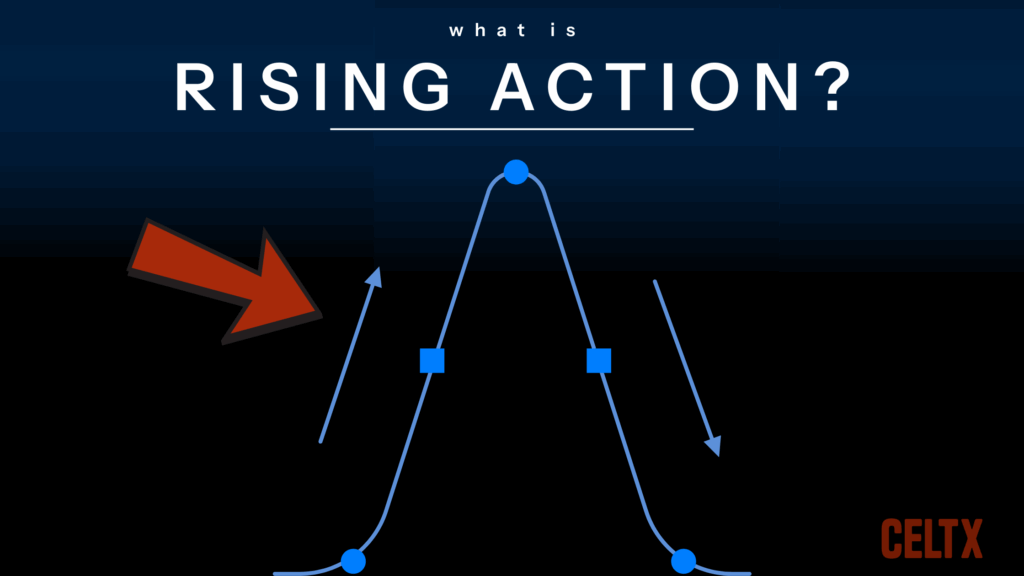
Attention does not vanish since the content is bad, it vanishes since nothing leaves without a feeling of completion. Expectation ensures that people continue to watch, read and return. When the viewers feel that a story is in the process of being told, they are hooked not because of being forced, but because they are curious.
Creating suspense does not involve elaborate narratives and theatrics. It demands a mere deliberate narrative progression that builds up momentum rather than solution too soon.
The Mistake Most Content Makes
Majority of the contents move towards the end. It is to the point, delivers the lesson and completes the whole thing in a single breath. Although this is comfortable, it eliminates tension–and with no tension, there is no need to remain.
The gap between what is known and that coming next is anticipated. The gap is intentionally created by a line of a frivolous story.
The Three-Part Story Arc That Works Everywhere
You do not have to have a five act. It suffices a three-part arc in the case of short-form content, launches, series, or campaigns:
Setup – Tension – Payoff
The arc is effective as it is based on the way that people process information. They desire context, followed by conflict, followed by closure. What is important about anticipation is not to reduce all these steps to a single moment.
Step One: The Setup (Orientation Without Answers)
The arrangement presents the problem–but not the remedy. It provides the audience with the sufficient amount of information on what type of story they are getting into.
Good setups answer:
- What’s the topic?
- Why does it matter?
- Who is this relevant for?
They leave everything to be explained. Its aim is orientation and not education. Curiosity comes about when individuals know their positions but they do not know their destinations.
Step Two: The Tension (Unfinished Business)
Tension is the place where suspense is created. It is brought about through putting forward an issue, contradiction or question that remains unanswered.
This could be:
- A common mistake people make
- A surprising observation
- Disagreement between anticipation and actuality.
- A hope of revelation insufficiently given.
The tension phase must be a bit uncomfortable, but good. It establishes mind loops or loops which the brain desires to be closed.
Here, loop-friendly scripting is potent. Avoiding resolution and progressing the story deliberately prolongs the watch time and boosts engagement without making the viewer feel like he is being manipulated.
Step Three: The Payoff (But Not the End)
The payoff does not eliminate the basic tension–but does not necessarily bring the story to its close. Good payoffs usually give the good answer and leave another question open.
This sustains the expectation of more than one piece of content. Viewers are satisfied and inclined to wonder what is to come.
It is not the endlessly conquering suspense. It is rhythmic closure–just sufficient resolution to have a value, just sufficient openness to go on.
How Anticipation Works Across Multiple Posts
The suspense gets worse when the plot cuts across media. One post sets the context. Another deepens the tension. A third delivers the insight.
Such a strategy transforms separated posts into chapters. Individually, they are separate and combined they become more important.
Those audiences who do not follow the entire chapter can still follow. Those people that subscribe to all of them are rewarded.
Use Progress, Not Teasing, to Build Trust
The withholding of value is not the same as anticipation. Every step must nonetheless provide something of use an insight, a reflection, a reframing.
As viewers believe that the journey is on course, they have faith in it. When they are stuck, they become uninvolved.
The distinction between good anticipation and clickbait is delivery. Good arcs always pay off.
Keep the Arc Simple on Purpose
Complex arcs slow momentum. Simple arcs scale.
When artists attempt to be too cunning, expectation becomes puzzlement. It is clarity that enables tension.
In case a person is not able to describe the story using a single sentence, then the arc is too complex.
Where This Works Best
Single story lines are particularly effective with:
- Product teasers
- Educational series
- Event promotion
- Creator journeys
- Brand narratives
- Ongoing content themes
Anticipation is advantageous in any case where you would wish that people remain in touch in the long run.
The Most Common Mistake to Avoid
The greatest flaw is to solve tension during an early stage due to fear of losing the attention. This is ironic in the sense that it ensures this.
Believe that inquisitiveness is greater than thoroughness. Let the story breathe.
Measuring Whether Anticipation Is Working
Find the indications of continuation:
- Individuals who pose questions such as what is next.
- More follows, or saves between posts.
- Return viewers
- Increased watch time towards later parts.
Anticipation will be manifested not only in measures.
Final Thoughts
There is no need of melodramatic narration to create suspense. You need intention. The bare minimum of plot, setup, tension, payoff, generates momentum without overload. You leave curiosity free when you do not feel the temptation to tell it all at once. And attention comes as a natural follow-up of curiosity.