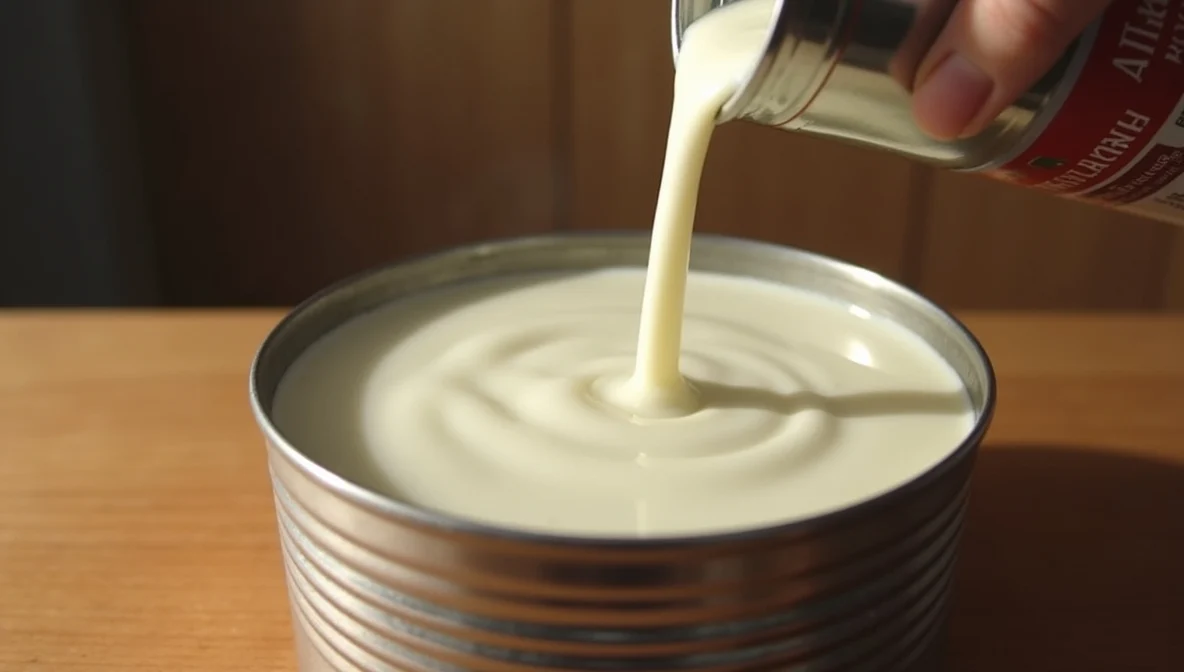
You know that weird can in the back of the pantry? The one next to the beans you swear you’ll cook someday. It’s not soup. It’s not soda. It’s evaporated milk. And it’s a secret kitchen superhero. Forget fancy cream. It is the old-school magic.
It’s just milk that took a really long, hot vacation. About 60% of its water packed up and left. What’s left is thicker. Richer. Creamier. And it won’t go bad sitting there for a year. Seriously. Let’s crack this can open and see what evaporated milk is really all about. What’s inside it? And what is evaporated milk used for that makes it so special?
Nutritional Facts & Calories — Evaporated Milk
Serving reference below is for plain evaporated whole milk (undiluted), shown per 100 g.
| Nutrient | Amount (per 100 g) | Quick note |
|---|---|---|
| Calories Energy | 134 kcal | Concentrated milk, so calories are higher than regular milk. |
| Total Fat Includes all fats | 7.56 g | Rich texture comes from fat + milk solids. |
| Saturated Fat Part of total fat | 4.59 g | Mainly from dairy fat. |
| Total Carbohydrate Milk sugars | 10.04 g | Most carbs come from lactose. |
| Sugars Naturally occurring | 10.04 g | No added sugar in plain evaporated milk. |
| Dietary Fiber Plant fiber | 0 g | Dairy has no fiber. |
| Protein Milk proteins | 6.81 g | Useful for sauces, coffee, and baking structure. |
| Cholesterol Naturally in dairy | 29 mg | Varies by fat level (whole vs low-fat). |
| Sodium Salt content | 106 mg | Brands can differ, check the label if needed. |
| Potassium Mineral | 303 mg | Milk is a natural potassium source. |
| Calcium Mineral | 261 mg | Concentration boosts calcium per spoon or splash. |
| Iron Mineral | 0.19 mg | Small amount. |
| Vitamin A Micronutrient | 65 mcg | May be higher if fortified. |
| Vitamin C Micronutrient | 1.9 mg | Small amount; heat processing can lower it. |
The Simple Alchemy: What Is Evaporated Milk Made Of?
It starts with a cow. Obviously, fresh, whole milk rolls into a factory. It’s pasteurized first. That’s just a fancy heat bath to zap any bad germs. Then, the real work begins.
The milk goes into a giant machine called a vacuum evaporator. Think of a massive, steaming pot with the pressure turned down low. It lets the milk simmer gently without burning. It bubbles away until over half of its water content vanishes into thin air. What remains is a concentrated milk potion.
But here’s the key. What is evaporated milk made of after that? Just milk. Sometimes, they add vitamins D and A, because the process can take some nutrients with the water. That’s it. No sugar. No weird preservatives. It’s literally just concentrated milk.
The high-heat treatment gives it a slightly caramelized, cooked flavor. A hint of sweetness that wasn’t there before. It’s a flavor that screams “homemade” in the best way.
Then, it’s canned. Sealed tight and sterilized in the can to make it shelf-stable. It is the magic trick. This process is why you can stash it in your cupboard for a rainy day. No fridge needed until you open it. It’s a relic of a time before every home had a refrigerator. A brilliant piece of food science that’s still rocking our kitchens today.
- It’s milk, reduced down to its creamy essence.
- The canning process is its superpower for shelf life.
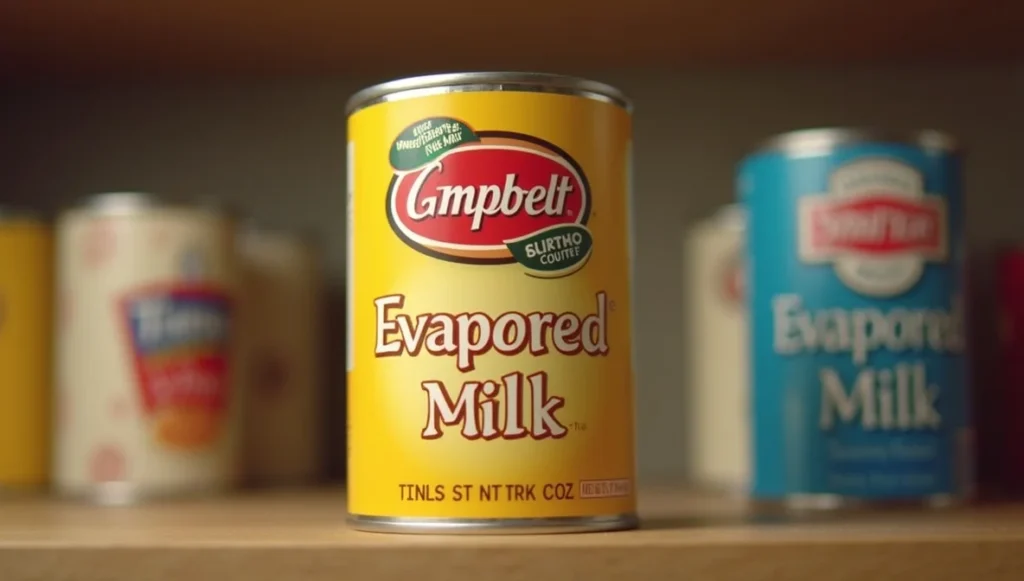
The Great Can Debate: What Is Evaporated Milk vs Condensed Milk?
It is where everyone gets tripped up. It looks identical in the grocery aisle. Same shape. Same size. Both are milks that have been cooked down. But inside? They are totally different beasts.
Evaporated milk is the savory, creamy workhorse. Remember, it’s just milk with water removed. What is evaporated milk vs condensed milk in the sugar department? Zero. Zilch. Nada. It’s unsweetened. It’s your secret weapon for adding lush texture without sweetness.
Sweetened condensed milk is the dessert darling. It’s also had water removed. But then, a massive amount of sugar is stirred in until it dissolves into a thick, syrupy, sweet goo. It’s like milk candy in a can. You would not want to pour this in your mashed potatoes. Trust me. I’ve seen it tried. It was a painful, sugary flop.
- Got a can? Shake it. If it sloshes, it’s likely evaporated. If it’s a quiet, thick glug, it’s condensed.
- Read the label. “Unsweetened” is your clue for evaporated.
Think of it this way. Evaporated milk vs condensed milk is the difference between a cup of black coffee and a caramel frappuccino. One is a pure, potent base. The other is a ready-made dessert. Mixing them up is a one-way ticket to ruining dinner and or creating a bizarrely sweet soup.
The Kitchen Workhorse: What Is Evaporated Milk Used For?
So, what is evaporated milk good for if it’s not dessert-in-a-can? Everything else. It’s the ultimate texture enhancer. The undercover cream. It’s your backup dancer that makes the main ingredient shine.
It’s the Heart of Classic Comfort Food.
Your grandma knew. That impossibly smooth, rich pumpkin pie at Thanksgiving? Probably evaporated milk. It sets up firmer than regular milk but lighter than cream. That luscious, no-lump cream sauce for your fettuccine? Evaporated milk won’t curdle as easily. It’s a lifesaver. Creamy mac and cheese that doesn’t get greasy? Yep. It’s the dairy backbone.
It’s the Secret in Your Coffee and Smoothies.
Out of creamer? A splash of evaporated milk is richer than regular milk. It adds body to your morning cup without the sugar of condensed milk. Toss it in a smoothie. It makes it creamy-dreamy. A hack baristas have used for decades.
It’s a Global Citizen.
In Southeast Asia, it’s drizzled over shaved ice desserts and strong coffee. In the UK, it’s a traditional addition to tea. In many parts of the world, it’s a reliable, safe source of dairy where fresh milk is hard to get.
It’s the Emergency Substitute.
No heavy cream? Mix equal parts evaporated milk and water. Boom, you’ve basically got whole milk. Need a half-and-half stand-in? Use it straight from the can. It’s the ultimate pantry pivot.
- Pies, puddings, custards
- Creamy soups and chowders
- Savory sauces and gravies
- Oatmeal, mashed potatoes, scrambled eggs
- Coffee, tea, hot chocolate
Beyond the Can: Modern Hacks & Why It’s Still Awesome
Some think evaporated milk is a dusty old relic. It is wrong. It’s having a quiet revival. Why? Because smart cooks love utility. And in a world of food trends, this is brand storytelling in a can. It tells a story of thrift, reliability, and pure function.
It’s a Budget-Friendly Superstar.
A can costs a fraction of a pint of heavy cream. It delivers a similar luxurious texture. In an economy where every penny counts, this is conversion optimization for your grocery bill. You’re converting a cheap ingredient into a premium result.
It’s Shelf-Stable Security.
Power outage? Fridge on the fritz? Your fresh milk is doomed. That can of evaporated milk is fine. It’s food security. For campers, preppers, or just forgetful people, it’s peace of mind. It is its core user intent value: reliability.
It’s Surprisingly Versatile for DIY.
Whip it. Chill a can in the fridge overnight, whip it with a little icing sugar, and you’ve got a stable, fluffy topping. Make “ice cream.” Blend it with frozen fruit and a little sugar. It’s instant, creamy soft-serve. It is where you see social proof—home cooks sharing these hacks online, proving their worth.
It’s a Baking Game-Changer.
It promotes beautiful browning. Cakes and breads made with it have a more tender, moist crumb. It’s the not-so-secret ingredient in some famous “copycat” recipes. It is where you build topical authority. Knowing this stuff makes you a smarter baker.
Got Questions? The Evaporated Milk FAQ
Can I drink evaporated milk straight from the can?
You can, but you might not want to. It’s very rich and has that distinct cooked flavor. It’s best used as an ingredient. But in a pinch, mixing it with an equal part of water makes a decent milk substitute.
Does evaporated milk go bad?
Unopened, it’s fine in your pantry for a year or more. Always check the “best by” date. Once opened, pour it into a sealed container and use it within 4-5 days, just like regular milk.
Can I freeze evaporated milk?
Yes! Freeze it in an ice cube tray. Pop out the cubes and store them in a bag. Perfect for tossing single servings into future soups, sauces, or coffees.
Is evaporated milk healthier than regular milk?
It’s more concentrated. So, ounce for ounce, it has more calories, fat, and protein than fresh milk. It also has more calcium and is often fortified with Vitamin D. It’s not “healthier,” just different—a powerful tool, not an everyday drink.
What’s the best substitute for evaporated milk?
The best homemade substitute is to gently simmer 2 ¼ cups of regular milk down to 1 cup. But who has time? For a quick fix, mix 1 cup of plain, full-fat powdered milk with 1 ½ cups of water. It’s not perfect, but it works in a crisis.
The Takeaway.
So, what is evaporated milk? It’s not a mystery. It’s not a mistake. It’s concentrated possibility in a humble tin. It’s the difference between a good soup and a great one. Between a so-so pie and a legendary one. It’s the texture hack your cooking has been missing.
Next time you’re at the store, grab a can. Stash it. Forget about it. Then, on a random Tuesday when you’re making chowder or scrambling eggs, remember it. Crack it open. That faint, sweet scent of cooked milk? That’s the smell of a kitchen win waiting to happen.
It’s not glamorous. It’s useful. And in a world full of overpriced, over-packaged “superfoods,” that’s its own kind of magic. Now make something creamy.
References:
- U.S. Dairy Export Council. “Concentrated Milk Products.” USDEC.org.
- U.S. Department of Agriculture FoodData Central. “Evaporated Milk, Canned.” fdc.nal.usda.gov.
Read More Food Related Blog: KFC Deals