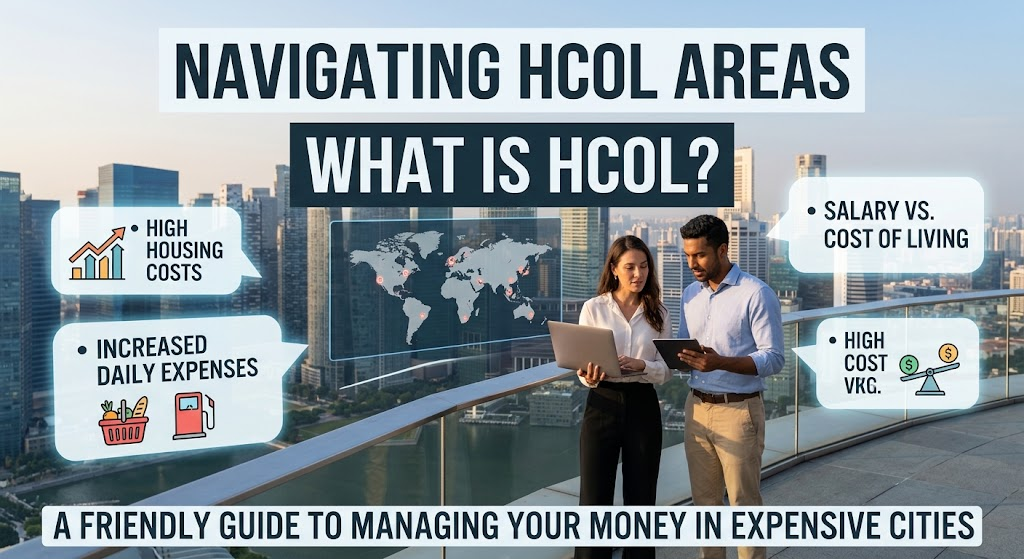
Living in a vibrant city sounds exciting, but it often comes with a steep price tag. If you have ever wondered why rent in one city costs twice as much as in another, you are looking at the concept of HCOL. Understanding HCOL helps you make smarter choices about where to live, work, and save money. Whether you are moving for a job or budgeting for the future, knowing how high expenses impact your daily life is crucial.
This guide breaks down the core concepts of high-cost living in simple terms. We will explore what makes an area expensive, look at real examples of high-cost cities, and discuss practical ways to stretch your income. By the end of this article, you will have a clear picture of how high expenses shape local lifestyles and financial choices.
What Does HCOL Mean in Everyday Life?
The term HCOL stands for High Cost of Living. It refers to geographic regions where the overall expense of everyday necessities is noticeably higher than the national average. When you live in an HCOL region, basic needs like housing, groceries, utilities, and healthcare take up a much larger slice of your monthly income.
Understanding HCOL meaning is simple when you look at daily purchasing power. In a standard location, a single dollar buys a certain amount of goods and services. However, in an HCOL area, that same dollar loses buying power because prices across all essential categories are elevated. Recognizing this dynamic helps you evaluate whether a higher job offer in a new location actually gives you more spending power.
+———————————————————————–+
| HCOL Overview Snapshot |
+———————————————————————–+
| Metric / Concept | Description / Details |
+———————–+———————————————–+
| Full Term | High Cost of Living |
+———————–+———————————————–+
| Key Identifiers | High housing, expensive healthcare, tax burden|
+———————–+———————————————–+
| Impact on Salary | Requires higher income to match lower-cost zone|
+———————–+———————————————–+
| Primary Driver | High demand for limited real estate and space |
+———————–+———————————————–+
Defining the HCOL Area Meaning Clearly
To grasp the full HCOL area meaning, you need to look at how local markets function. An HCOL area is defined by a consistent trend of high prices across multiple economic sectors, not just one or two isolated expensive items. It is an environment where housing supply is low, demand is extremely high, and local economic activity drives prices upward for everyone.
Living in an HCOL area affects more than just your rent or mortgage payment. It influences how much you pay for a cup of coffee, local transportation, insurance, and dining out. Knowing the true HCOL area meaning helps individuals plan realistic monthly budgets and negotiate fair salaries that match local price levels.
Main Characteristics of an HCOL City
An HCOL city usually possesses key traits that drive up everyday expenses for residents. The primary driver is almost always real estate. Land in a major HCOL city is limited, which creates fierce competition among homebuyers and renters. This competition inflates property values and monthly rent payments significantly above national averages.
Beyond housing, an HCOL city typically features higher local taxes, elevated utility costs, and pricier service industries. Businesses in an HCOL city must pay higher commercial rent and competitive wages to their workers, which forces them to raise prices on goods and services. These factors combine to create an environment where living costs remain high year-round.
Key Factors That Create High-Cost Zones
Several factors combine to turn a regular location into a high-cost environment. High job growth in well-paying industries like technology, finance, and healthcare attracts skilled workers quickly. As more people move in, local demand for homes outstrips supply, which raises property prices rapidly.
Infrastructure and geographical limitations also play a major role. Cities constrained by oceans, mountains, or strict zoning laws cannot expand outward easily. When space is tight, real estate prices climb continuously. Additionally, popular cultural amenities, great schools, and safe neighborhoods make these regions highly desirable, further pushing costs upward.
Comparing HCOL vs LCOL Environments
Comparing a high-cost zone (HCOL) to a low-cost zone (LCOL) reveals massive differences in lifestyle and budgeting. In a low-cost region, housing is affordable, allowing residents to save more money even on a modest salary. Basic goods and local services cost far less, giving people higher discretionary spending power.
Conversely, living in an HCOL region requires careful financial planning. Even though salaries are often higher in an HCOL city, the increased cost of rent, taxes, and groceries can quickly absorb that extra income. Understanding these differences allows you to choose an environment that matches your personal financial goals.
Examples of Major HCOL Cities Around the World
Many famous cities across the globe fit the description of an HCOL city. Places like New York City, San Francisco, London, and Tokyo are world-famous for high expenses. In these urban centers, real estate prices are exceptionally high, making homeownership a challenge for average income earners.
Other notable examples of an HCOL area include cities like Zurich, Singapore, and Los Angeles. Residents in these locations enjoy top-tier job opportunities, world-class entertainment, and public services, but they must balance those benefits against steep daily living expenses.
How Housing Drives High Costs
Housing is the single largest factor in any HCOL area. When rent or mortgage payments take up 40% to 50% of your monthly income, managing other expenses becomes much harder. In high-demand urban centers, landlords can charge premium rates because available apartments fill up fast.
The domino effect of expensive housing touches every part of local life. When workers pay high rent, they require higher wages from employers. Employers then raise prices on products and dining to cover labor costs. Thus, expensive real estate remains the foundational engine behind high local prices.
Salary Adjustments and the Cost of Living
When moving to an HCOL location, negotiating a proper salary adjustment is vital. A job offer that seems huge on paper might actually result in lower buying power if the new location has much higher expenses. Companies often offer location-based pay adjustments to help employees cover local costs.
To evaluate a job offer properly, research the specific HCOL meaning for that region and calculate your expected monthly expenses. Factor in housing, state taxes, commuting costs, and groceries. Ensure your net pay covers these expenses comfortably while still allowing you to build emergency savings.
Practical Budgeting Tips for Expensive Areas
Managing your money in an HCOL area requires proactive habits and discipline. First, track every expense carefully to see where your money goes each month. Reducing discretionary spending on dining out and premium entertainment can free up significant funds for essential bills.
Second, consider flexible living arrangements to lower housing expenses. Sharing an apartment with roommates or living slightly outside the main HCOL city center can cut rent costs substantially. Utilizing public transportation instead of owning a car also eliminates parking fees, auto insurance, and gas expenses.
Is Living in an HCOL Location Worth It?
Choosing to live in an HCOL environment depends entirely on your personal priorities and career goals. High-cost locations often offer unmatched career advancement, networking events, cultural diversity, and public infrastructure. For ambitious professionals, access to top employers makes the higher expenses worthwhile.
However, if your primary goal is rapid debt payoff or early retirement, an HCOL area might slow down your progress. Balancing the professional benefits against the financial tradeoffs is the key to deciding if a high-cost environment fits your long-term plan.
Conclusion
Navigating an HCOL lifestyle successfully comes down to awareness, clear budgeting, and realistic expectations. While an HCOL city offers incredible career options and vibrant culture, it demands careful financial discipline to keep up with elevated prices. By understanding the true HCOL area meaning and learning how local price structures work, you can make informed decisions about where to build your life, advance your career, and protect your financial well-being.
Frequently Asked Questions (FAQs)
What does HCOL mean in real estate?
In real estate, it refers to High Cost of Living areas where property purchase prices, property taxes, and monthly rent rates are significantly higher than national averages.
What is the main difference between HCOL and VHCOL?
HCOL stands for High Cost of Living, while VHCOL stands for Very High Cost of Living. VHCOL regions, like Manhattan or San Francisco, have extreme housing and tax costs that far exceed standard high-cost zones.
How do I know if I live in an HCOL area?
If housing costs consume more than 30% to 40% of the average local income and basic goods like groceries and utilities cost noticeably more than nearby towns, you likely live in an HCOL area.
Do salaries always scale up in an HCOL city?
Many employers offer higher base salaries to compensate for living costs in an HCOL city, but the wage increase does not always completely cover the difference in housing and tax expenses.
Can I save money while living in an HCOL area?
Yes, you can save money by creating a strict monthly budget, sharing housing costs with roommates, using public transit, and minimizing unnecessary spending on dining out.
What is an LCOL area compared to HCOL?
An LCOL area has a Low Cost of Living, meaning housing, utilities, food, and services are affordable, allowing your money to go further compared to an HCOL region.